
Can I Run Mirror's Edge™ Catalyst on NVIDIA RTX 5050?
Check if this GPU meets the system requirements for Mirror's Edge™ Catalyst. Get FPS estimates and optimization tips.
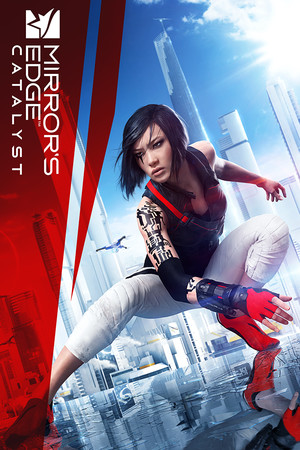
Can NVIDIA RTX 5050 run Mirror's Edge™ Catalyst? This report projects 1080p Medium FPS from the GPU score, then compares NVIDIA RTX 5050 with the publisher minimum (NVIDIA GeForce® GTX 650 Ti 2GB or better / AMD Radeon™ R9 270x or better) and recommended (NVIDIA GeForce® GTX 970 4GB or better / AMD Radeon™ R9 280x 3GB or better) graphics.
At 1080p Medium we estimate about 77 FPS average and 53 FPS 1% lows. NVIDIA RTX 5050 matches the publisher recommended GPU (NVIDIA GeForce® GTX 970 4GB or better / AMD Radeon™ R9 280x 3GB or better). This is a GPU-led projection with a typical mid-range CPU and 16 GB of RAM, not a live capture from your PC.
NVIDIA RTX 5050
Estimated average FPS · 1080p Medium
77
FPS
This GPU should run the game well at 1080p Medium.
Avg FPS
77
1% Low
53
GPU load
94%
Stutter risk
Low
RTX 5050 · 16 GB · 1080p · Medium · Mirror's Edge™ Catalyst
FPS by resolution (Medium)
All settings presets 1080p
| Preset | Avg FPS | 1% low | GPU % | Stutter |
|---|---|---|---|---|
| Low | 112 | 76 | 94% | Low |
| Medium | 77 | 53 | 94% | Low |
| High | 53 | 36 | 99% | Low |
| Ultra | 37 | 25 | 99% | Low |
GPU vs publisher requirements
NVIDIA RTX 5050 matches the publisher recommended GPU, so Medium to High at 1080p is a realistic target.
Minimum GPU
NVIDIA GeForce® GTX 650 Ti 2GB or better / AMD Radeon™ R9 270x or better
Recommended GPU
NVIDIA GeForce® GTX 970 4GB or better / AMD Radeon™ R9 280x 3GB or better
Min CPU: Intel i3-3250 / AMD FX-6350. (Note: Mirror's Edge Catalyst requires at least 4 logical cores to run)
Min RAM: 6 GB RAM
Min storage: 25 GB available space
Bottleneck & smoothness
CPU · Moderate
Your GPU is ahead of your CPU. CPU-bound scenes (simulation, streaming, open worlds) may limit frame rates.
Playability
Good
Smoothness
PLAYABLE
Avg frame time
12.94 ms
Suggested target
60 FPS
What to expect
Mirror's Edge™ Catalyst on NVIDIA RTX 5050 should feel smooth at 1080p Medium, with 1% lows near 53 FPS. 1440p Medium is around 45 FPS, and 4K Medium around 28 FPS.
We score NVIDIA RTX 5050 (75) against this title’s demand, then estimate average FPS, 1% lows, GPU load, and stutter risk. Real FPS still moves with drivers, patches, and scene complexity — treat this as a planning report, not a lab benchmark.
Settings optimizer
Aim for ~60 FPS: High at 1080p is a strong balance.
Upgrade path
NVIDIA RTX 5050 is a workable GPU for Mirror's Edge™ Catalyst at 1080p. Spend upgrades on VRAM or a newer generation only if you want 1440p/4K or Ultra presets.
Personal PC check
This page is game plus GPU only. Add your CPU and RAM on the full check for a private, noindex result.
FAQ
Can I run Mirror's Edge™ Catalyst on NVIDIA RTX 5050?
This GPU should run the game well at 1080p Medium. NVIDIA RTX 5050 matches the publisher recommended GPU (NVIDIA GeForce® GTX 970 4GB or better / AMD Radeon™ R9 280x 3GB or better). This public estimate is game plus GPU only. A weaker CPU or 8 GB of RAM can drop FPS further.
What settings should I use on NVIDIA RTX 5050?
Aim for ~60 FPS: High at 1080p is a strong balance.
Will NVIDIA RTX 5050 hit 60 FPS in Mirror's Edge™ Catalyst?
Yes at 1080p Medium in this model (~77 FPS). Watch 1% lows (53) if you want competitive smoothness.
Does this page include my CPU and RAM?
No. This URL is game plus GPU so it can be indexed. For a personal CPU/RAM result use the full PC check — that page stays noindex.
How accurate is this Mirror's Edge™ Catalyst GPU estimate?
We score NVIDIA RTX 5050 (75) against this title’s demand, then estimate average FPS, 1% lows, GPU load, and stutter risk. Real FPS still moves with drivers, patches, and scene complexity — treat this as a planning report, not a lab benchmark.