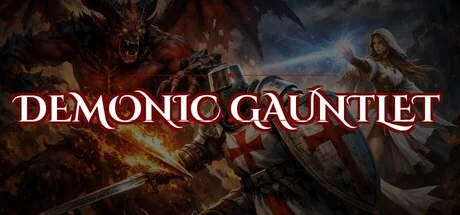
Demonic Gauntlet
L33t Pro Studio
I am a solo developer that has worked in the games industry for decades. I had the idea of making this game. It is just a christian demonology treaty converted into a game. There is the famous Ars Goetia, part of the Lemegeton that catalogs 72 demons with their names, ranks, seals and powers.
Systemanforderungen
Mindestanforderungen
Empfohlene Anforderungen
Über dieses Spiel
I am a solo developer that has worked in the games industry for decades. For years I had the idea of making this game.
It is just a christian demonology treaty converted into a game.
A question was in my mind since I was at the school and read about demons: Where did Dante Alighieri got his idea of the Inferno from? His Divine Comedy (early 14th century) describes nine circles of Hell with an almost obsessive level of detail: the geography, the punishments, the demons guarding each circle.
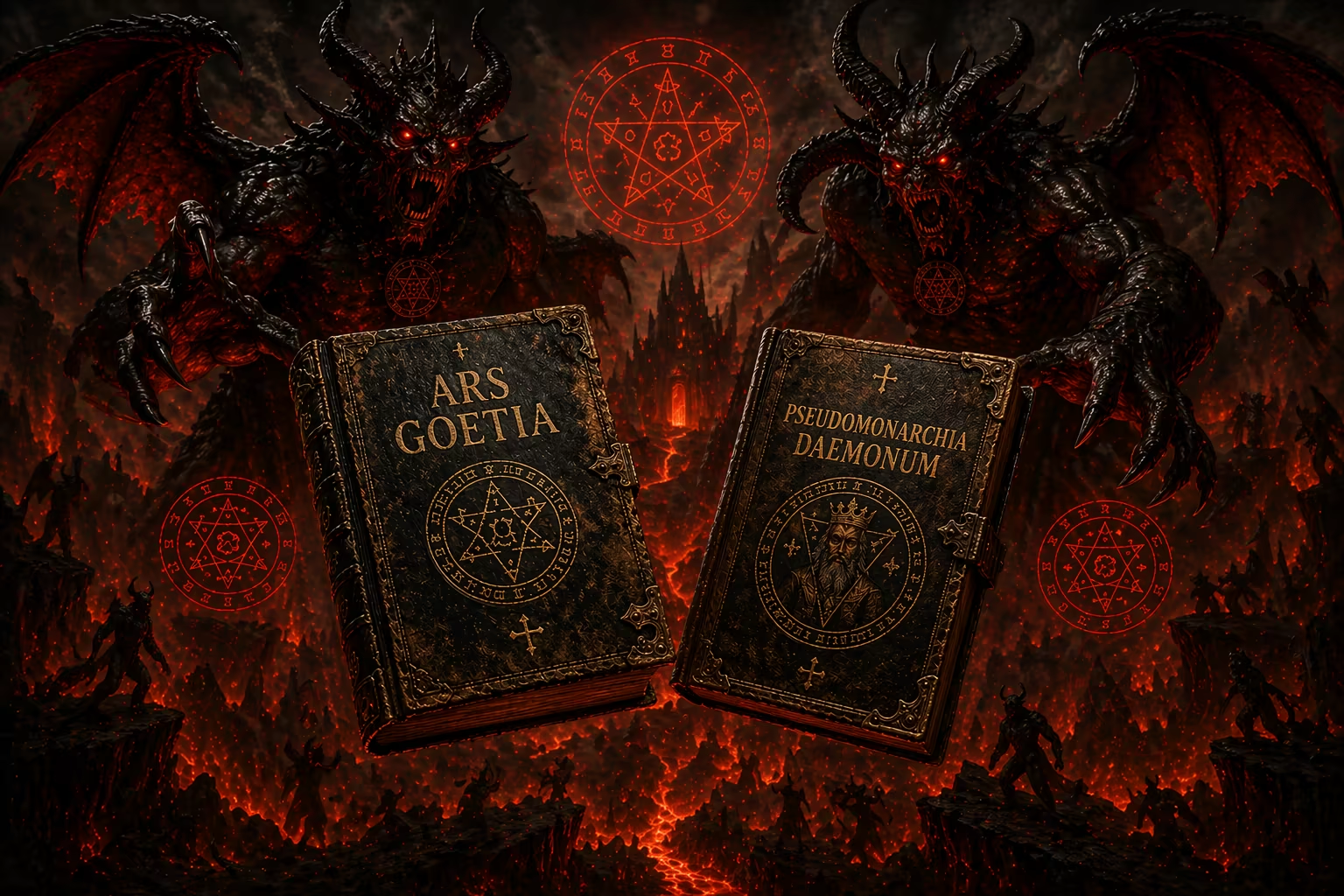
And then there is the famous Ars Goetia, part of the Lemegeton (also known as the Lesser Key of Solomon), a 17th-century grimoire that catalogs 72 demons with their names, ranks, seals and powers, a document so precise it reads more like a military report than a religious text. Or the Malleus Maleficarum (1487), written by Heinrich Kramer, the notorious inquisitor's handbook that shaped how the Church classified demonic hierarchies for centuries.
And also the Pseudomonarchia Daemonum by Johann Weyer (1577), which lists 69 demons and their powers, predating the Ars Goetia and offering a fascinating parallel catalog. Or the Dictionnaire Infernal by Jacques Collin de Plancy (1818), the first illustrated encyclopedia of demons, where many of the iconic demon images we know today were first drawn.
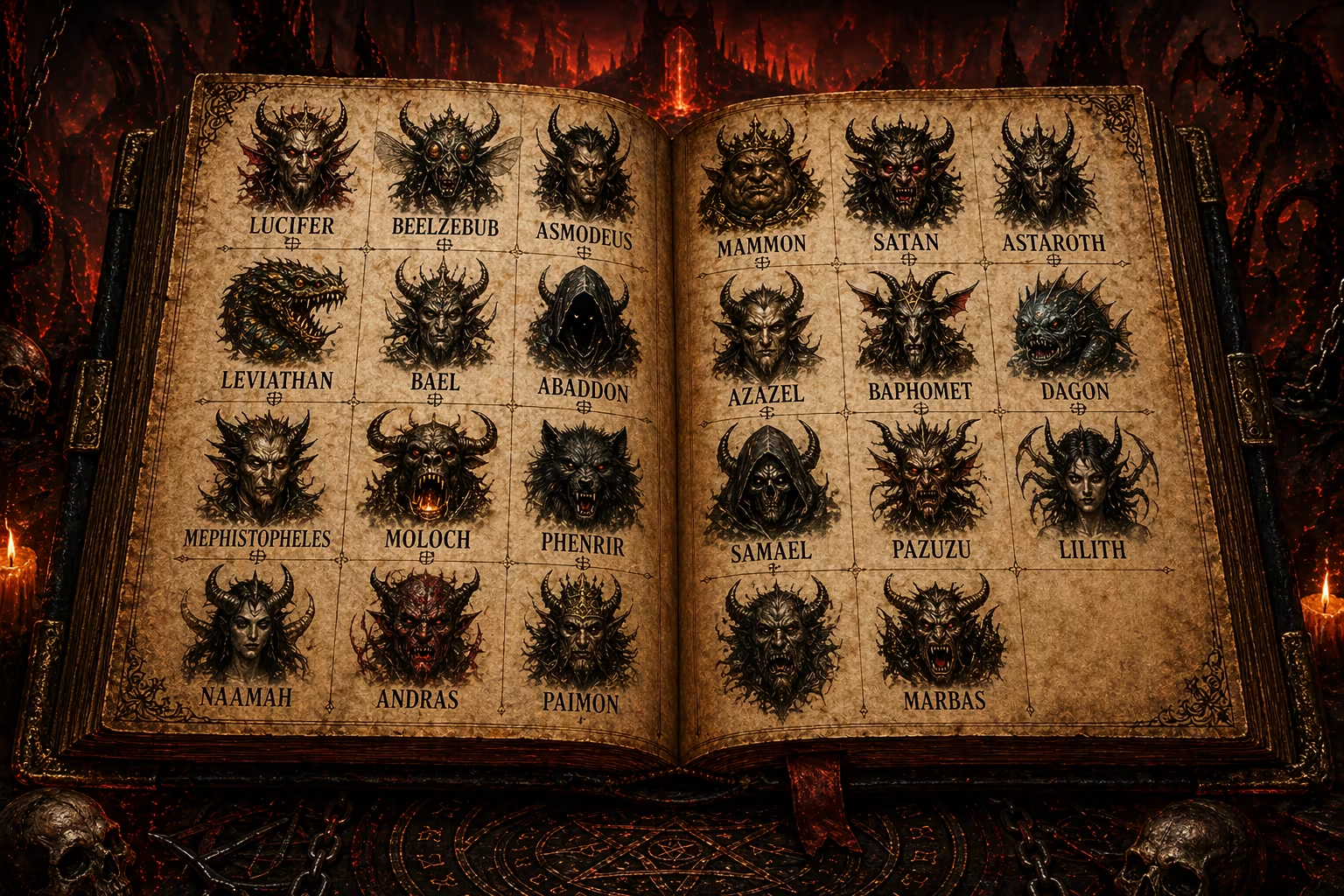
Where did all those demon names and descriptions come from? What is their relation to ancient Sumerian, Babylonian and Hebrew religions? How did they craft such deep, structured descriptions of Hell and all its inhabitants?
Well, if you want answers, they are all in here. Each boss you face is a real demon from those ancient texts. Before every fight, you unlock their full historical record: their origin, their rank in Hell, the ancient sources that first described them, and how their myth evolved across centuries. It is genuinely fascinating stuff, and it hits differently when you are about to fight the thing you just read about. There are also many other demons that are just mobs walking around, check their names and look them up. Interesting stories behind.
Each level is one of Dante's nine circles, with its own lore, atmosphere and story. You descend deeper as you progress, and the world changes around you.
The gameplay itself is straightforward and fun: choose your sacred fighters, explore the circles of Hell, collect gold, items and powers, and battle your way through increasingly dangerous hordes and bosses. It is an easy pick-up-and-play experience, but finishing it and reading everything along the way will genuinely teach you something about the history of Christian demonology. And finally you will kill Lucifer if you are up to it.
I kept the price very low on purpose. I want as many people as possible to enjoy it, and maybe walk away knowing a little more about where all these demon names and infernal maps actually came from.
And also maybe check the books. Only maybe!
Teile dein Spielerlebnis
Help other gamers! Share how this game runs on your setup, share tips, or ask questions.
Bestbewertete Spiele
Discover similar games you might enjoy based on genre and creator.

Haftungsausschluss
Die Spielinformationen, Bilder, Beschreibungen und Systemanforderungen, die auf dieser Seite angezeigt werden, stammen von Drittanbieterplattformen und sind nicht Eigentum von Can I Run It. Wir sind nicht mit den Spieleentwicklern, Publishern oder Distributoren verbunden, werden von ihnen nicht unterstützt und stehen in keiner Verbindung zu ihnen.
Can I Run It ist ein Systemkompatibilitäts-Prüfdienst, der Nutzern hilft festzustellen, ob ihre Hardware bestimmte Spiele ausführen kann. Wir verkaufen, vertreiben oder hosten keine Spielinhalte.
Alle hier erwähnten Marken, eingetragenen Marken, Produktnamen und Firmennamen oder Logos sind Eigentum ihrer jeweiligen Inhaber.
Wenn Sie der Meinung sind, dass angezeigte Inhalte Ihre geistigen Eigentumsrechte verletzen, kontaktieren Sie uns bitte unter [email protected] mit relevanten Details, und wir werden uns umgehend um Ihre Anliegen kümmern.